Jets' code of silence
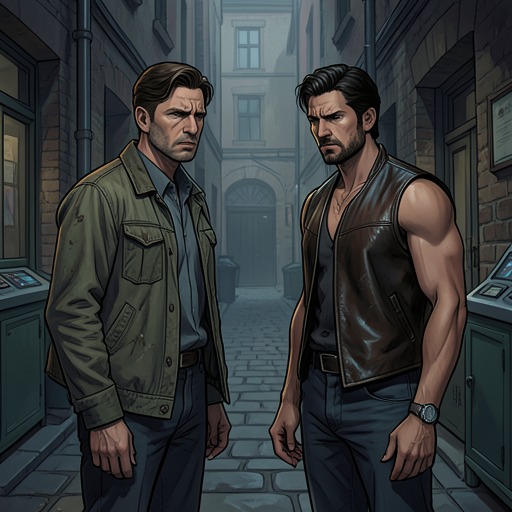
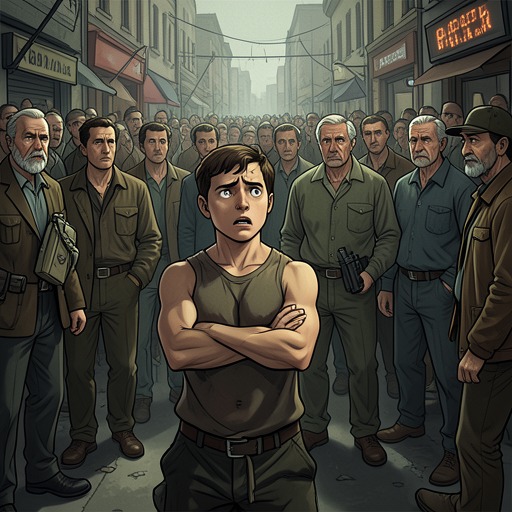
West Side StoryThe Jets' code of silence is a peer-enforced rule against cooperating with the police or disclosing what the gang knows about the night's events. A-Rab states it plainly to Baby-John, who swears to keep quiet; the exchange makes the code a small but pointed act of solidarity under police pressure, rather than proof of a formally organized or universally observed system.
The Rule and Its Immediate Stakes
As the boys wait, Baby-John asks whether Action is taking command. A-Rab treats that as uncertain, but is firm about the boundary that matters: the Jets must not make a deal with the police or tell them what they know about the night. He twists Baby-John's arm as he makes the demand, giving the reminder a physical edge as well as the force of a shared expectation.
Baby-John raises his free hand and swears to say nothing. He then explains that the Sharks keep showing the same movie he saw when they caught him, and suggests that recounting that experience gives them an alibi. The detail distinguishes silence about the night's events from the boys' ability to use an account of the movie as a defense; the scene does not show Baby-John revealing the gang's other knowledge to the police.
Police Pressure
The code takes shape against Schrank's openly coercive view of policing. After thirty years on the force, he regards everyone as corrupt and troublemakers as people to be removed with a baton. He threatens the boys with punishment if he catches them moving, and takes particular notice of A-Rab's expression. The encounter presents the police not simply as investigators seeking information, but as a powerful presence the Jets expect to punish and distrust.
Schrank also asserts control over where the boys may gather. He grips Riff's shoulder hard enough to hurt and tells the Jets to confine themselves to their own block and stop obstructing the sidewalk, citing raids and explosions between them and the Puerto Ricans. Riff answers evenly despite the pain. Schrank's restriction and the gang's refusal to inform are different responses to the same contested streets: one imposed through a badge and physical force, the other maintained through loyalty among the boys.
Silence as a Contest
When Schrank confronts the Jets and Bernardo, he tries to discover where the expected fight will take place. He dismisses the idea that good Americans would mix with the Sharks except to fight, proposes possible locations, and alternates a claim to be on the boys' side with threats and insults. The boys do not provide the location. When Action becomes enraged, Riff and Gee-Tar hold him back, and Schrank retreats while threatening to find them wherever they fight. The scene shows how police provocation and the boys' guardedness coexist: their silence withholds information, but it does not end the confrontation.
Schrank's own conduct sharpens the imbalance. He lights a cigarette and flicks the spent match into Tiger's coffee; he then orders Bernardo and the other Latinos out, acknowledging that he has no legal right to command them to leave while relying on his badge to make the order effective. Later he taunts the Jets about the fight and their families, rests a hand on his baton, and waits for Action to attack. Against that openly antagonistic pressure, A-Rab's instruction to Baby-John defines silence as a means of keeping the gang's knowledge from the police, not as evidence that the police have earned its trust.
Meaning and Limits
The episode presents the code through a specific exchange between A-Rab and Baby-John, not through a written rule or an account of every Jet's conduct. Its force comes from the younger boy's pledge and the immediate circumstances in which it is made: police threats, pressure to reveal the fight's location, and the prospect of punishment. The rule binds the boys to one another while leaving the underlying conflict unresolved; Schrank continues to threaten them, and the expected fight remains in view.